
The "Scent Seeking, Pulse Discovering" Chinese Incense Culture Theme Exhibition opened on 1 December 2025 in Classroom CC324. Jointly organised by the Research Centre for History and Culture (BNBU), the Chinese Culture and Global Communication, Department of Communication, the Faculty of Humanities and Social Sciences (BNBU), and Zhongshan Tianxiang Bieyuan Cultural Communication Co. Ltd., the exhibition offers visitors a unique opportunity to immerse themselves in the historical context and spiritual significance of Chinese incense culture. It runs until 3 December, during which time professors and students are welcome to visit, enjoy the different scents on offer and engage with the exhibition.
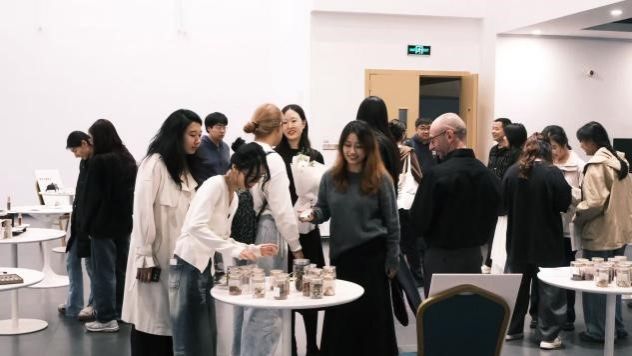
The exhibition began at 17:00 on 1 December, and was characterised by a lively atmosphere. Xie Yuchen, a senior student from CCGC and the exhibition's lead organiser, welcomed the attendees and expressed her gratitude before introducing the organising team. She then gave a brief overview of the three core sections of the exhibition.
Section 1: Tang and Song Elegance – Harmonizing Scents for Refinement and Daily Life
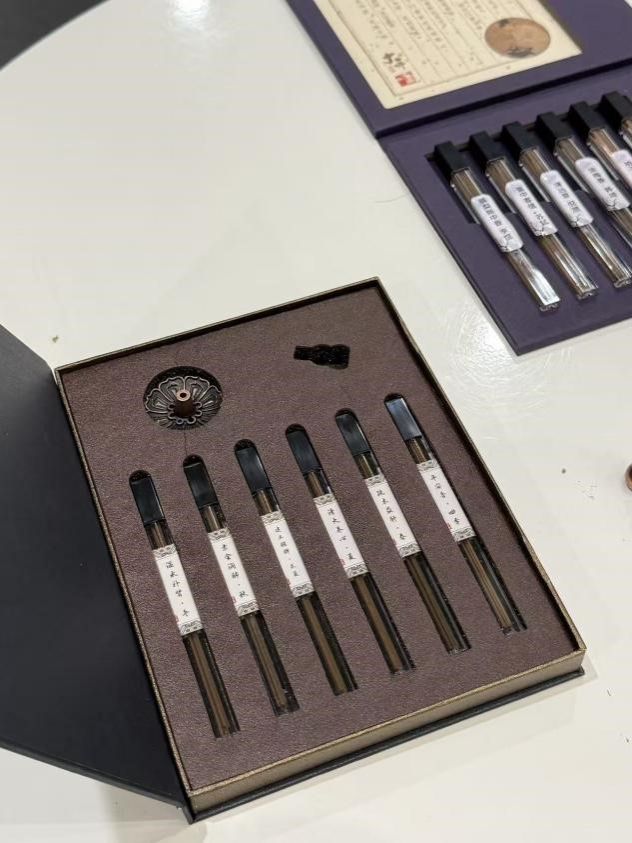
This section focuses on the flourishing of incense culture during the Tang and Song dynasties. It is divided into two main exhibition areas: The Tang Dynasty Court and the Song Dynasty Literati. The Tang Dynasty area showcases the incense-burning rituals of the aristocratic elite during the prosperous Tang era. It features exhibits such as "Pear Blossom in the Curtain Incense", plum blossom incense, coiled incense, and Tang Dynasty incense burners. The Song Dynasty area features literati incense formulas such as "Spring Message in Snow" and "Old Bureau of the Su Brothers", as well as rubbings of incense recipes, including Huang Tingjian's (1045-1105) "Yi He" and "Shen Jing". It also showcases literati incense tools and floral art, offering a glimpse into the lifestyle of the Song literati and their practices, such as "burning incense for reading" and "meeting friends with incense". Together, these exhibits illustrate the evolution of incense from courtly rituals to the daily lives of the literati.
Section 2: Global Trade – Foreign Envoys, Cultural Exchange
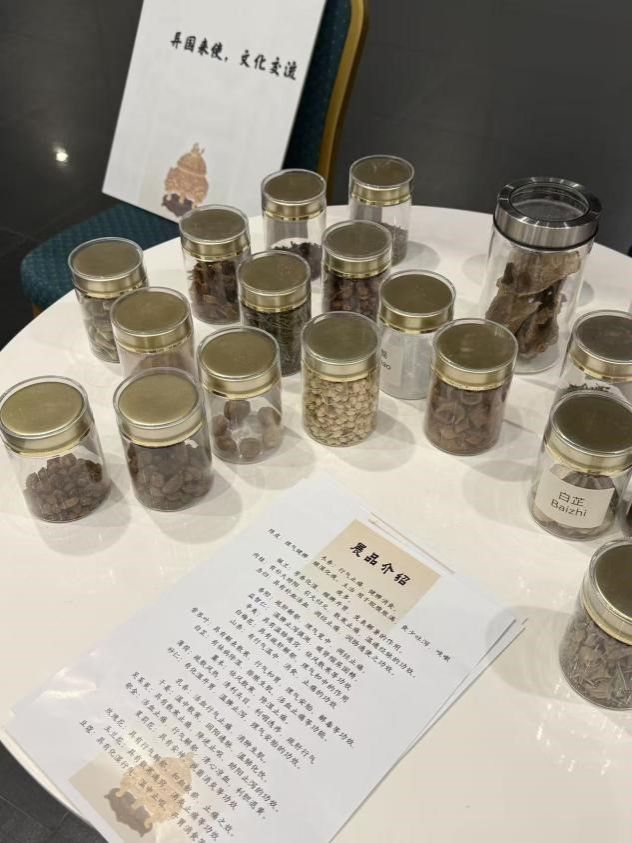
Incense can serve as a narrative axis along the "Silk Road", demonstrating its cross-cultural value as a carrier of civilisation. The exhibition showcases a variety of Chinese and foreign aromatic materials, including agarwood, sandalwood, frankincense, and myrrh, alongside antique incense burners. Together, these items provide a visual representation of the role of incense in facilitating cultural exchanges between China and India, Arabia and Japan, among other regions. This reflects the inclusive spirit of Chinese incense traditions, which are characterised by their "all-embracing" nature.
Section 3: Women and Incense Culture – Old Stories Reimagined, Impressions Recreated
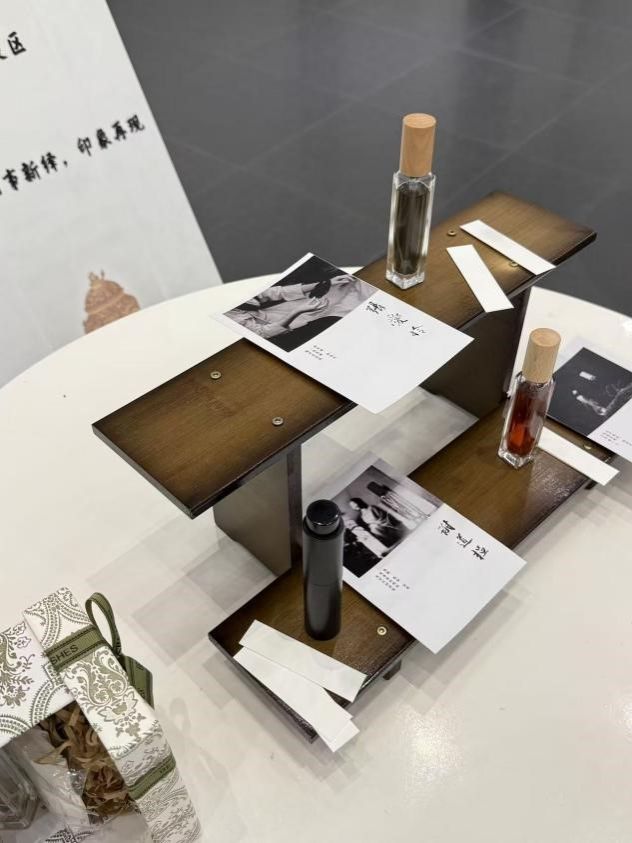
This section focuses on three notable women: female writer Xie Daoyun (fl. late 4th cent.), Empress Wu Zetian (624-705), and Chang Eileen (1920-1995). Through the reconstruction of scenes depicting the creation of incense, it explores the symbolic meaning of incense in women's spiritual worlds. Xie’s embodies the talents of female literati and scholars, Empress Wu’s incense symbolises supreme power and majesty, and Chang’s highlights the fragmentation and awakening that occurred during the transition between the old and new eras. Through the use of scent, the exhibition illustrates how women employed incense to influence their personal character and inner spiritual realm.
This exhibition is more than just a cultural display; it is a dialogue that transcends time and space. Through an in-depth exploration of incense culture, faculty and students alike can experience the wisdom of a way of life that embraces the idea of "calming the mind with incense and nurturing one’s character by smelling it", all amidst the lingering fragrance. The organisers hope that, by participating in such an activity, more people will come to understand and appreciate traditional Chinese incense culture, and thus inherit this unique Eastern elegance.
Reporter: Yuhan Ma
Photographer: Feiyu Chen and Yushan Li
Reviewer: Jianing Chen
©2024-2025 Beijing Normal-Hong Kong Baptist University(BNBU).All Rights Reserved.粤ICP备07509519号粤公网安备44049102496044.
