
On December 6, 2025, Associate Professor Dr. Wei Chin Wong and Instructor II Miss Connie Li Tian from the Department of Communication, Faculty of Humanities and Social Sciences at the Beijing Normal University-Hong Kong Baptist University (BNBU), led a group of students from the Chinese Culture and Global Communication (CCGC) program on an in-depth study tour to Macau. Designed to move beyond classroom theory, the tour offered students direct exposure to how traditional culture is being transformed, revitalized, and communicated internationally through innovative narrative strategies and technological integration within leading Asian cultural tourism settings. This experience aimed to deepen students’ professional insights and inspire practical reflection beyond the confines of the classroom.
The first stop of the tour was POLY MGM MUSEUM. Upon arrival, faculty and students were immediately immersed in Macau’s distinctive Sino-Western cultural atmosphere. POLY MGM MUSEUM was located at the very heart of MGM MACAU lies the Grande Praça, an awe-inspiring homage to old-world Europe and Macau’s Portuguese heritage. The wall design on the north side of the Grande Praça is fashioned after Estação Rossio, Lisbon’s central rail station, to capture the most quintessential cultural attributes of Portugal.

Figure 1: Located on the second floor of MGM MACAU, POLY MGM MUSEUM features an architectural design that embodies a strong fusion of Chinese and Western cultural styles.
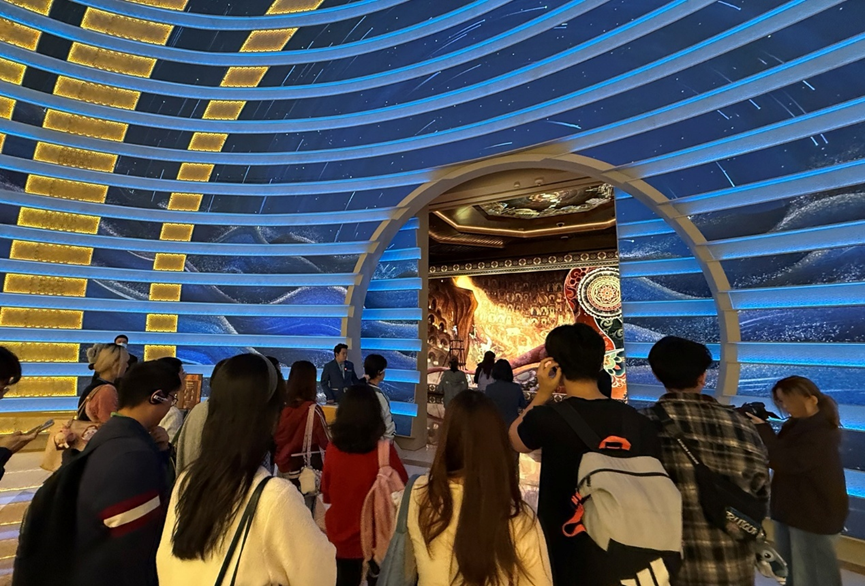
Figure 2: The entrance dome of POLY MGM MUSEUM, where faculty and students prepared to travel through time.
As a leading world-class cultural tourism landmark in Asia, POLY MGM MUSEUM presented its 2nd exhibition, “Silk Roads Beyond Borders”—offering students an immersive multi-sensory cultural experience. Guided by the museum’s professional docent Ms. Angela Tam, faculty and students systematically examined over 200 precious artifacts ranging from the Western Zhou Dynasty to the present day, including silk textiles, gold and silverware, ceramics, Buddhist statues, musical instruments, calligraphy, paintings, and modern artwork. The exhibition not only traced the historical trajectory of the Silk Road through artifacts but also utilized immersive digital experiences and Organic Light-Emitting Diode (OLED) to transport visitors back to the vibrant crossroads where diverse civilizations once converged. Through multimedia storytelling, it vividly conveyed the profound and enduring resonance of the Silk Road spirit across time. This experience significantly deepened the students’ understanding of “cultural heritage” and “contemporary expression,” highlighting the critical role of international curation, technological innovation, and narrative spatial design in connecting past and present and engaging with global audience.
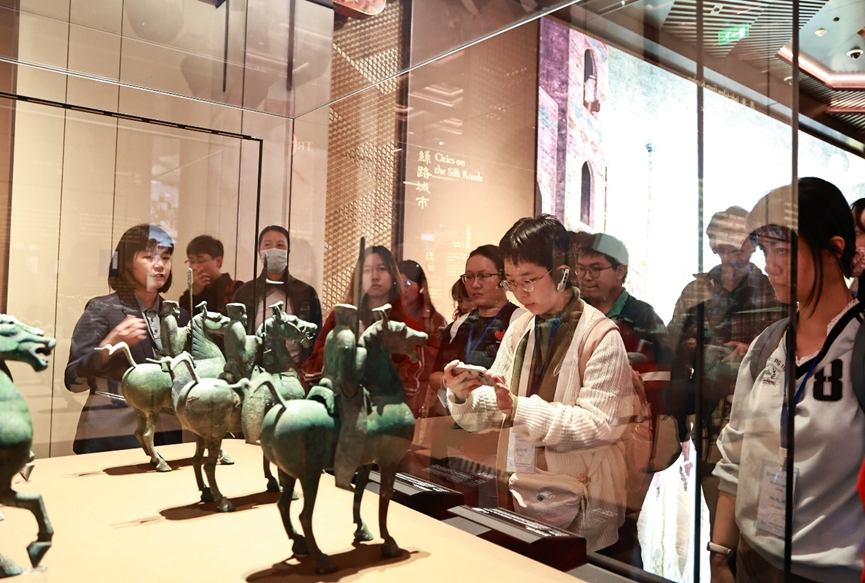
Figure 3: Using the iconic “Bronze Procession of Cavalry and Chariots” as a visual reference, the docent explains the historical trajectory of cultural exchange across the Eurasian continent.

Figure 4: With proprietary OLED screen for interactive display, the Silk Road artifact—a piece of blue‑and‑white porcelain—was brought to life.
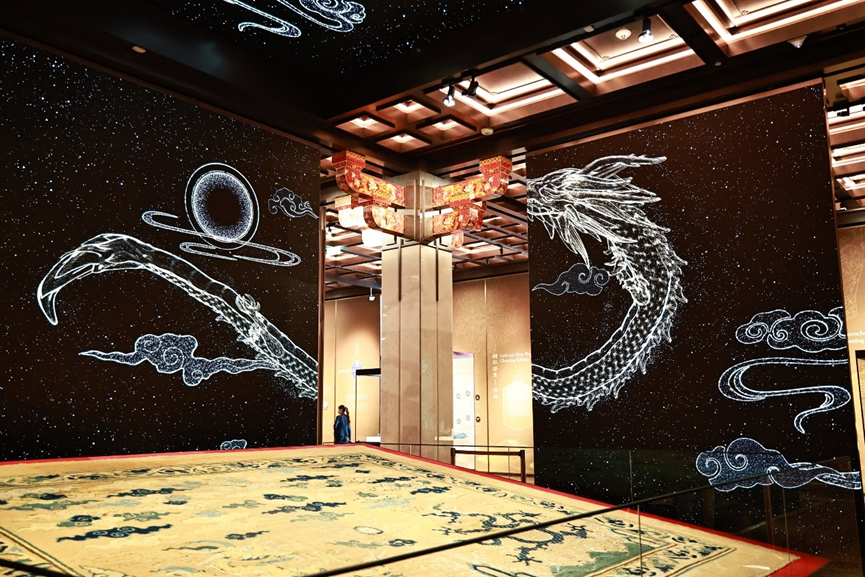
Figure 5: A central dragon soars above while a Dragon‑Patterned Throne Carpet rests below; the exhibition hall of POLY MGM MUSEUM ingeniously arranges the curves of traditional dougong columns to evoke distant totemic forms.
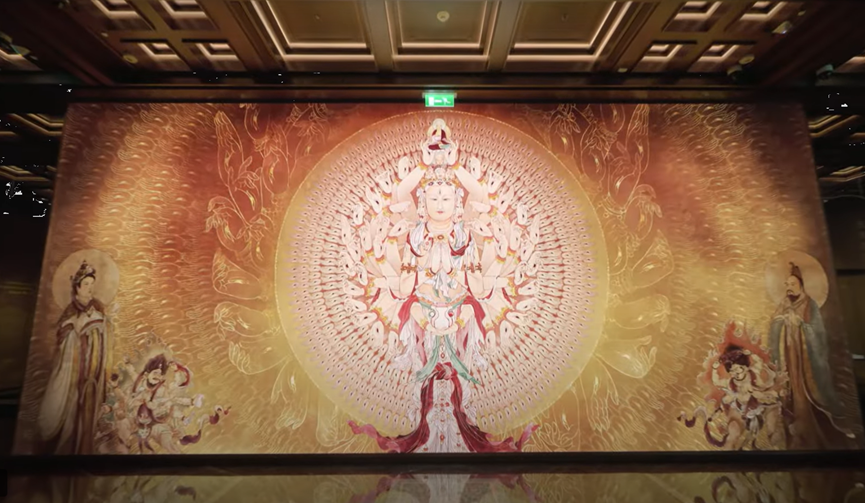
Figure 6: A massive LED projection screen at the center of the museum, titled “Thousand-Arm Guanyin”, brings to life the encounter between Chinese and Western civilizations over millennia.
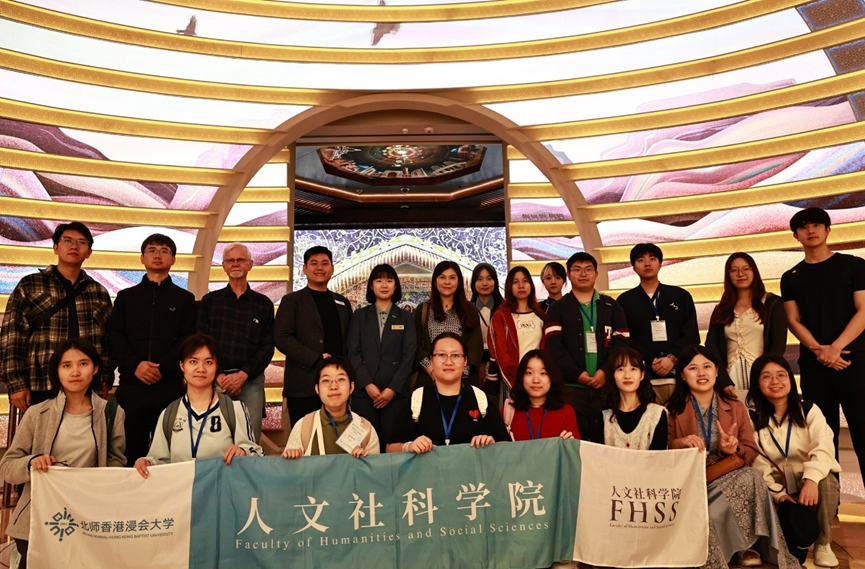
Figure 7: A group photo with museum docent Angela (standing center) in the entrance hall of POLY MGM MUSEUM The second and third from the left in the back row are special guests—Professor Chao Huang and Professor Paul Van Dyke.
Subsequently, Dr. Wei Chin Wong facilitated a 40‑minute dialogue and interview between three CCGC student representatives and key industry practitioners: MGM MACAU Arts and Culture Operations Supervisor Mr. John Chan, POLY MGM MUSEUM docent Ms. Angela Tam, and MGM Assistant Director of Corporate Relations Ms. Karen Lam. This direct exchange allowed students to contextualize and reflect upon the communication theories studied in the classroom, clarifying the relevance of their academic training to real‑world professional pathways.
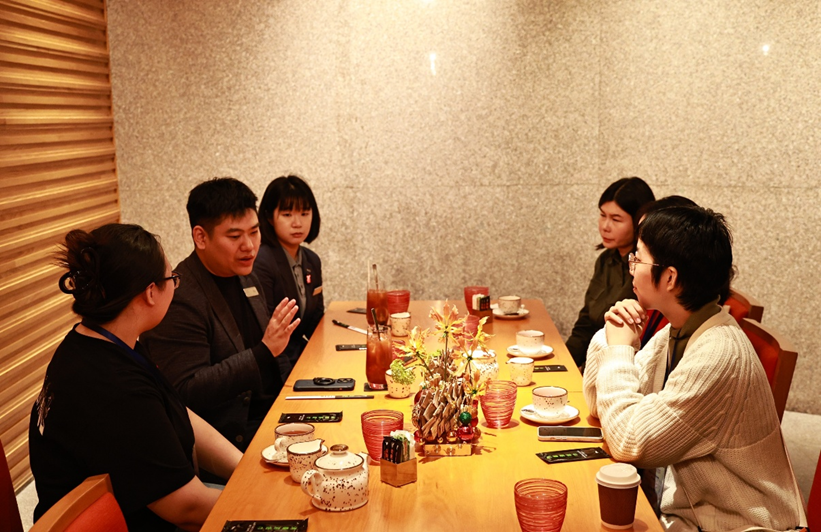
Figure 8: The dialogue and interview explored themes such as the integration of tradition and technology, the competencies required for industry professionals, and emerging trends in cultural tourism development. The on‑site exchange was dynamic and engaging.
In the afternoon, the tour proceeded to MGM COTAI in Macau’s Cotai district, entering a new realm of immersive cultural tourism. At the MGM Theatre at MGM COTAI, students received exclusive access to observe the advanced stage lighting and sound design of “Macau 2049”—a production helmed by director Zhang Yimou and developed by an internationally acclaimed creative team—and to explore its backstage facilities. Faced with state-of-the-art technical integrations including a 4K LED screen spanning over 900 square meters (approximately three tennis courts), 108 kinetic mirror lighting units, a 19.1-channel immersive surround sound system, and configurable seating, both faculty and students witnessed a visual spectacle reminiscent of the 2008 Beijing Olympics opening ceremony. Staff provided detailed insights into the production’s 2,838-hour meticulous creation process, enabling students to understand how the performance utilizes cutting-edge technology to redefine traditional intangible cultural heritage art. It transforms millennia of Chinese cultural essence into a universal artistic language that resonates directly with the human spirit. This experience served as an instructive and inspiring model for powerfully narrating Chinese stories through contemporary means.
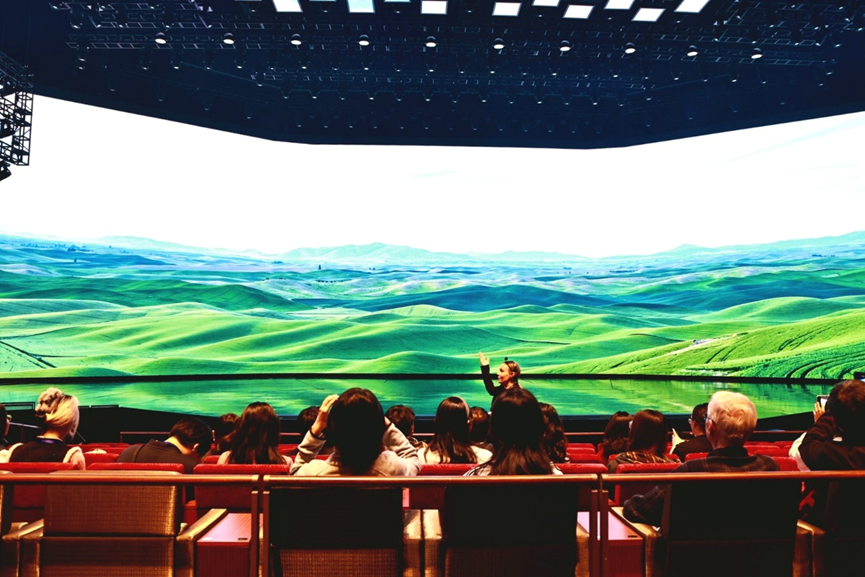
Figure 9: The Stage Manager of “Macau 2049” explains the advance stage lighting and sound systems to faculty and students.
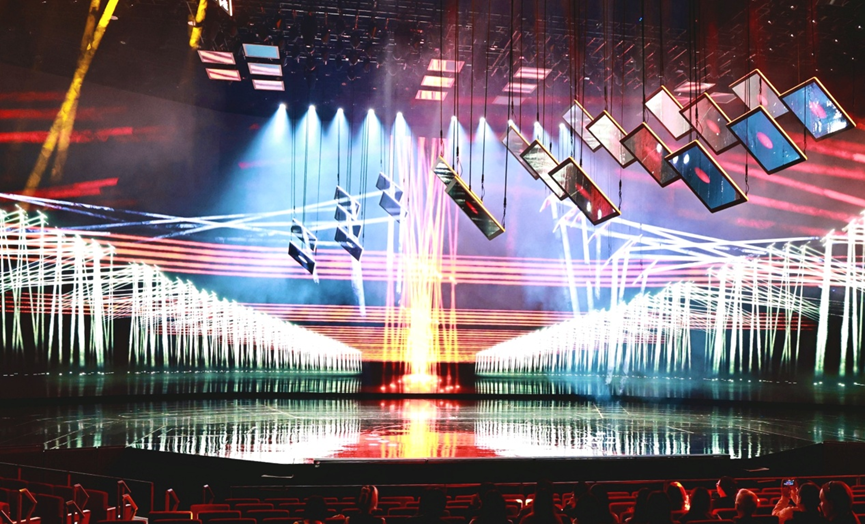
Figure 10: Faculty and students had the opportunity to observe the lighting and sound setup on the stage of Zhang Yimou’s “Macau 2049” theatre production.
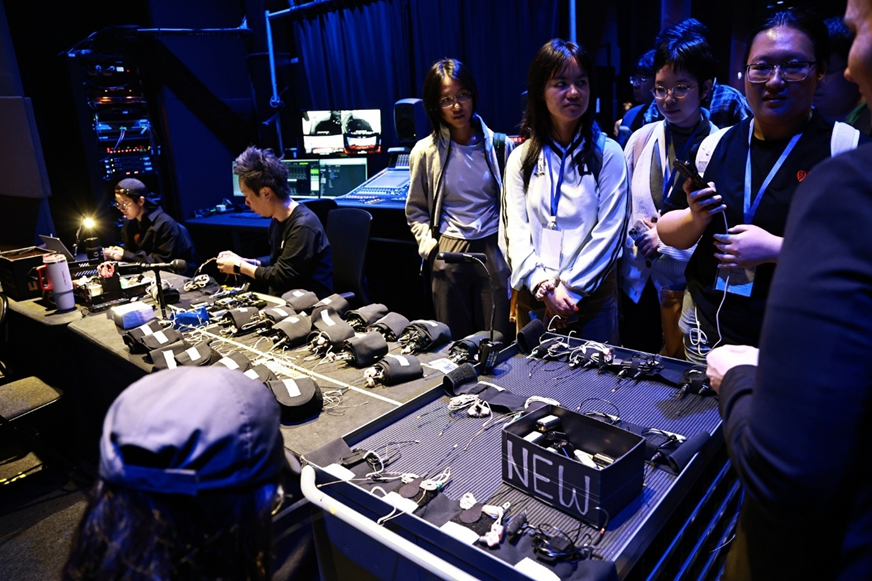
Figure 11: CCGC students enter the theatre backstage, observing firsthand how technicians operate high‑end audio‑visual equipment and stage technology.
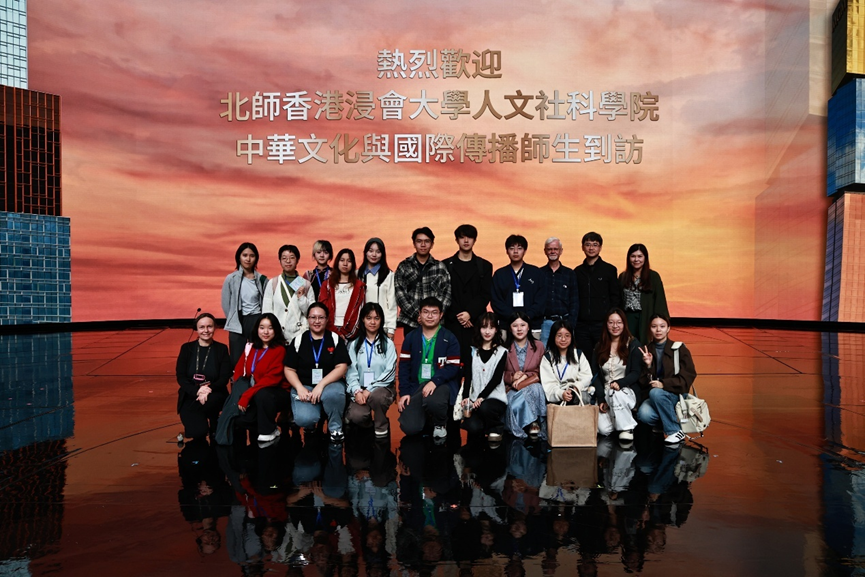
Figure 12: Faculty and students gather for a group photo on the stage of “Macau 2049,” with the Stage Manager, Ms. Magda Dudek positioned first from the left in the front row.
During the guided tour of MGM COTAI, both teachers and students gained deeper insight into the venue’s significant cultural collection and its narrative approach to art. The group had the experience of entering a “360-Degree Art Museum,” where the artistic elements are seamlessly integrated throughout the property’s public spaces. The collection of 28 Chinese imperial carpets from the Qing Dynasty—notable for their exquisite craftsmanship —offered the group a tangible link to the refined aesthetics and ritual traditions of imperial China. In contrast, contemporary artist Hung Yi’s sculptures, such as Mr. and Mrs. Lion and Journey to the Great West, articulated traditional Chinese values of family and literature through a vibrant, modern visual vocabulary—demonstrating how classical cultural themes can be reinterpreted as contemporary artistic statements.
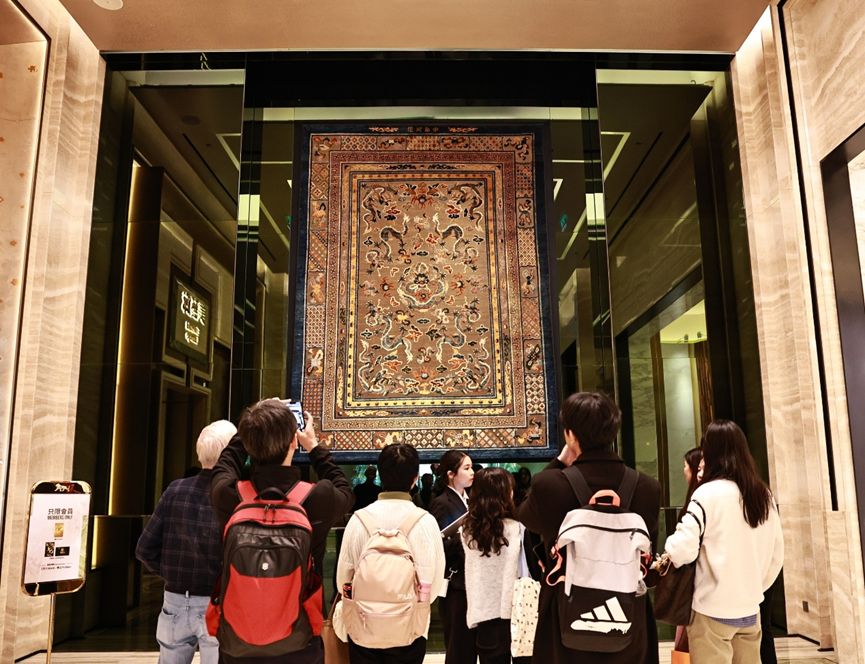
Figure 13: The group viewed up close the 28 Qing Dynasty imperial carpets collected by MGM COTAI. Woven with gold, silver, and copper threads into silk carpets, they feature patterns of dragons, phoenixes, flowers, and a variety of Sino-Western motifs.
One of the highlights of the itinerary was the “Fondant Art Exhibition,” co-presented by MGM and China’s celebrated “Sugar King,” Zhou Yi. Mr. Zhou creatively integrates Chinese intangible cultural heritage crafts—such as traditional dough modeling—with the Western medium of fondant, producing life-sized sculptures over two meters tall. These works interpret classic Chinese cultural themes such as “Traditional Chinese Wedding Rituals”, “Lion Dance,” “Yum Cha Culture,” embodying traditional values of auspiciousness and propriety. This exhibition stands as a compelling example of “Intangible Cultural Heritage Innovation” and the MGM’s Art Philosophy– “Art of Living”.
By boldly merging culinary art—including sugar crafting and fondant work—with fine art techniques such as painting and carving, it revitalizes scenes from daily life and historical narratives, offering a fresh cultural tourism experience that is both culturally substantive and visually engaging. The students expressed admiration and personally sensed the vibrant communicative power and commercial potential that emerge when traditional craftsmanship is reimagined through contemporary creativity.
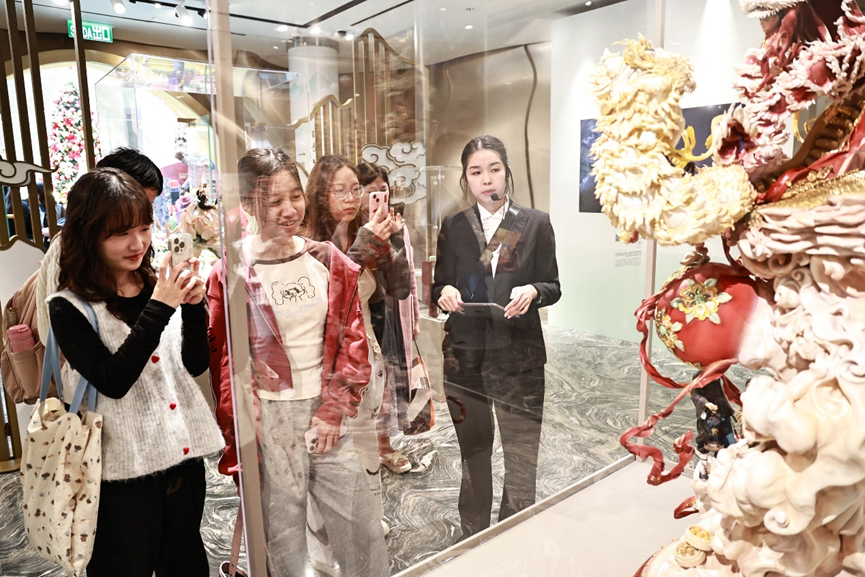
Figure 14: Students viewing the fondant sculptures and art pieces up close.
This “classroom beyond walls” allowed students from the Chinese Culture and Global Communication (CCGC) program to move past textbook theory and directly engage with cutting-edge practices in cultural tourism integration. Through a curated series of immersive experiences—spanning the transcultural historical narratives at POLY MGM MUSEUM, the technology-driven stagecraft of MGM COTAI, the contemporary presentation of cultural heritage, and the cross-disciplinary revitalization of intangible cultural heritage—students not only deepened their grasp of how culture can engage the public and connect globally through varied forms of expression, but also grew more conscious of their future role as cultural communicators. That role calls for grounding in expertise, taking flight through creative thinking, embracing an international outlook, exploring the depths of Chinese cultural heritage, leveraging technology and media with skill, and ultimately, bringing Chinese stories to life with authenticity, resonance, and confidence on the world stage.
Special Thanks to:
MGM MACAU, MGM COTAI, the Macau 2049 Stage Production Team
Written by: Connie Li Tian
Edited by: Wei Chin Wong
Photography by: Yilin Zhao
©2024-2025 Beijing Normal-Hong Kong Baptist University(BNBU).All Rights Reserved.粤ICP备07509519号粤公网安备44049102496044.
